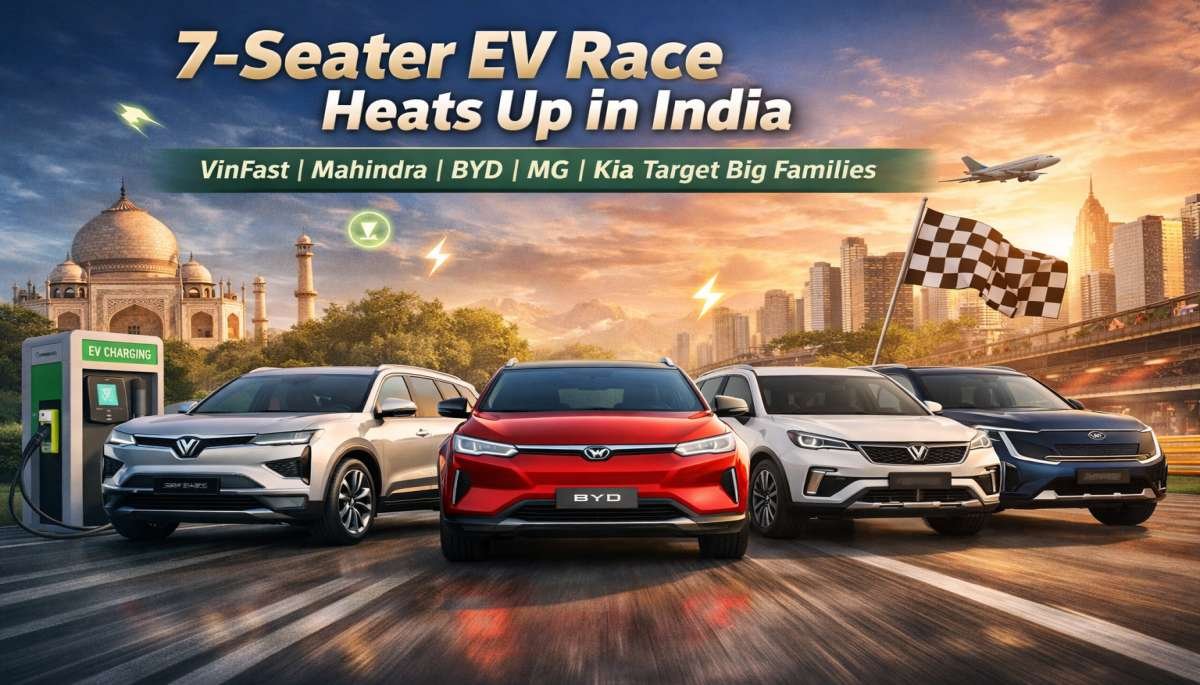
India’s 7-seater EV race is entering an exciting new phase. With rising demand for spacious, eco-friendly mobility, automakers are now focusing on electric SUVs that cater to large families. Brands like VinFast, Mahindra & Mahindra, BYD, JSW MG Motor India, and Kia are all gearing up to capture this fast-growing segment.
The shift is not random. Indian buyers are increasingly choosing SUVs over sedans, and with government incentives pushing electric mobility, the timing couldn’t be better. The result? A fierce competition to dominate the family-friendly electric SUV space.
Why the 7-Seater EV Race in India Is Heating Up
To begin with, the surge in the 7-seater EV race is driven by changing consumer needs. Families want more space, better safety, and lower running costs all without compromising on modern tech.India’s push toward electrification is another major factor. Government initiatives like FAME (Faster Adoption and Manufacturing of Electric Vehicles) and state-level EV policies are encouraging both manufacturers and buyers to shift to electric.
At the same time, rising fuel prices and growing environmental awareness are nudging buyers toward EVs. For large families, a 7-seater electric SUV offers the perfect blend of practicality and sustainability.
Key Players Dominating the 7-Seater EV Race
Now that the stage is set, let’s look at the brands leading this transformation.
VinFast’s Bold Entry into India
Vietnam-based VinFast is aggressively expanding globally, and India is a key market. The company has already showcased models like the VF series internationally, some of which include three-row seating configurations.VinFast is also investing in local manufacturing, which could help keep prices competitive. Its strategy is clear—offer premium electric SUVs with global design and advanced features.
Mahindra’s Electric SUV Push
Homegrown giant Mahindra & Mahindra is betting big on EVs. Its upcoming electric SUV lineup, under the BE and XUV.e sub-brands, is expected to include larger, family-oriented models.Mahindra already has strong brand trust in the SUV segment. If it successfully brings a 7-seater EV, it could quickly gain traction among Indian buyers.
BYD’s Premium Electric Approach
Chinese automaker BYD is known for its advanced battery technology. In India, BYD has introduced models like the e6 and Atto 3, focusing on premium buyers.
Globally, BYD offers larger electric SUVs, and industry experts expect it to bring similar products to India. Its Blade Battery technology gives it a strong edge in safety and efficiency.
JSW MG and Kia Join the 7-Seater EV Race
As competition intensifies, more brands are entering the space with serious intent.
MG’s Expanding EV Portfolio
JSW MG Motor India has already established itself in India’s EV market with models like the ZS EV and Comet EV.The company is now exploring larger electric SUVs, potentially including 7-seater options. MG’s focus on connected tech and value pricing could make its offerings appealing to families.
Kia’s Future-Ready EV Plans
Kia has global expertise in electric vehicles, with models like the EV9 a full-size electric SUV with three-row seating.While not officially confirmed for India, Kia’s strategy suggests that bringing a 7-seater EV here is only a matter of time. Given Kia’s strong presence in India’s SUV market, expectations are high.
What Buyers Can Expect from 7-Seater Electric SUVs
Moving forward, the upcoming wave of electric SUVs will focus on more than just space.
Range and Performance Improvements
Battery technology is improving rapidly. Most upcoming 7-seater EVs are expected to offer real-world ranges of 400–600 km, making them suitable for long family trips.
Fast-charging capabilities will also play a key role, reducing downtime during travel.
Advanced Features and Comfort
These vehicles will likely come packed with features such as:
- Large touchscreen infotainment systems
- Advanced driver assistance systems (ADAS)
- Panoramic sunroofs
- Flexible seating configurations
Comfort will be a priority, especially for third-row passengers something often overlooked in traditional SUVs.
Challenges in the 7-Seater EV Race in India
Despite the excitement, there are a few roadblocks that automakers must address.
Charging Infrastructure Limitations
India’s charging network is growing, but it still lacks the density needed for widespread EV adoption, especially in smaller cities and highways.
High Initial Costs
Electric SUVs, particularly 7-seaters, are expensive due to large battery packs. Even with subsidies, affordability remains a concern for many buyers.
Consumer Awareness
Many buyers are still unsure about EV ownership, including battery life, resale value, and maintenance costs. Automakers will need to educate customers to build trust.
Opportunities for Automakers in This Segment
On the flip side, the potential is massive.
India is one of the largest SUV markets in the world, and family-oriented vehicles dominate sales. A well-priced, reliable 7-seater EV could quickly become a bestseller.Fleet operators, ride-sharing services, and corporate buyers also represent a huge opportunity for electric MPVs and SUVs.Moreover, early movers in this segment can establish strong brand loyalty and market leadership.
The Road Ahead for India’s 7-Seater EV Race
Looking ahead, the 7-seater EV race in India is expected to accelerate over the next few years. With multiple global and domestic players entering the market, competition will drive innovation and pricing improvements.Government support, better infrastructure, and increasing consumer acceptance will further boost adoption.
Industry analysts from reputed platforms like Bloomberg and Reuters have consistently highlighted India as a key growth market for electric mobility, especially in the SUV segment.
Conclusion: A New Era for Family Mobility
The 7-seater EV race is not just about new car launches it signals a major shift in how Indian families will travel in the future.With brands like VinFast, Mahindra & Mahindra, BYD, JSW MG Motor India, and Kia stepping in, the segment is set for rapid growth.For buyers, this means more choices, better technology, and cleaner transportation. For the industry, it marks the beginning of a highly competitive and transformative phase.Simply put, the race has begun and it’s only getting faster.